
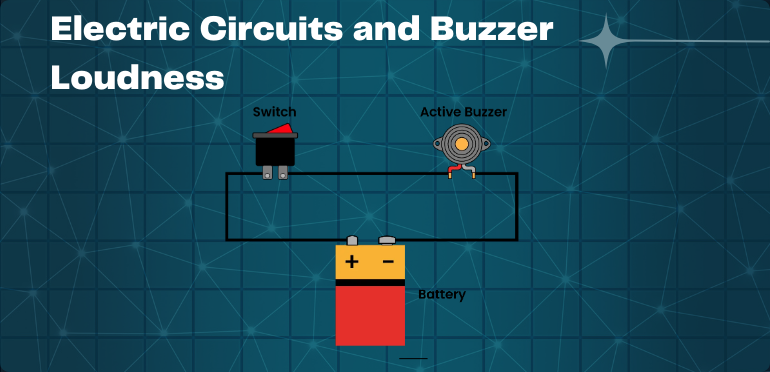
Electric circuits are a core topic in school science, helping students understand how electrical energy is converted into other forms of energy. In this guide, we focus on how electric circuits affect buzzer sound level, explaining how circuit components, current, and voltage affect sound production—an essential concept taught through online teaching by an experienced online science tutor.
This pillar page provides a complete overview and connects to detailed lessons for deeper understanding.
What Is Electricity And How Do Electric Circuits Affect Buzzer Sound?
Electricity is a form of energy produced by the movement of electric charges. When electric current flows through a circuit, it can produce different effects such as sound, heat, or motion.
Key points:
- Electricity flows as electric current
- A closed circuit is required for current to flow
- Electrical energy can be converted into sound energy
What Is an Electric Circuit?
An electric circuit is a closed conducting path through which electric current flows from a power source, through electrical components, and back to the source.
If the circuit is open:
- Current does not flow
- The buzzer does not produce sound
This concept is fundamental in all online teaching lessons on sound in circuits.
Types of Electric Circuits
Series Circuit
- Single path for current
- Same current flows through all components
- Buzzer sound becomes weaker when more components are added
Parallel Circuit
- Multiple paths for current
- Each component receives full voltage
- Buzzer produces louder and consistent sound
Circuit Components and Their Functions (Buzzer-Based Circuit)
A buzzer circuit includes the following essential components:
- Cell/Battery: Supplies electrical energy
- Connecting Wires: Provide a path for current
- Switch: Opens or closes the circuit
- Buzzer: Converts electrical energy into sound energy
Buzzer Loudness in Electric Circuits
What Is Buzzer Loudness?
Buzzer loudness refers to the intensity of sound produced when electric current flows through the buzzer.
What Determines Loudness in a Buzzer?
Loudness depends on the amount of electric current flowing through the circuit.
Factors affecting buzzer loudness:
- Number of cells or battery voltage
- Circuit type (series or parallel)
- Resistance in the circuit
- Quality and rating of the buzzer
More current results in a louder sound.
Real-Life Uses of Buzzer Circuits
Buzzer-based circuits are widely used in:
- Doorbells
- Alarm systems
- Emergency warning devices
- Timers and electronic gadgets
Practice Questions for Better Understanding
To help you master buzzer loudness and electric circuits, try these quick practice questions. They cover the main ideas from this guide—like circuit types, factors affecting sound, and real-life uses. Answer them on your own first, then check your notes. This is a great way to prepare for exams and build confidence!
Practice Question 1 (Short Answer)
What happens to the buzzer sound if you add more cells (batteries) in series to the circuit? Explain why.
(Answer hint: Louder sound because higher voltage → more current flows through the buzzer.)
Practice Question 2 (Multiple Choice)
In which type of circuit does the buzzer produce a louder and more consistent sound even when extra components are added?
- A) Series circuit
- B) Parallel circuit
- C) Open circuit
- D) Broken circuit
Answer: B (Parallel – each path gets full voltage.)
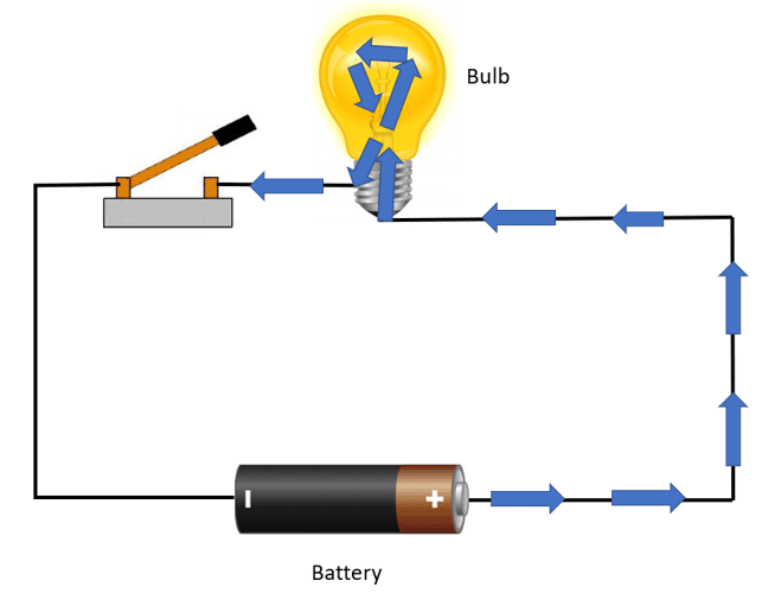
(This shows a simple series circuit example – notice single path, adding more would weaken components.)
Practice Question 3 (Explain with Reason)
Why does the buzzer NOT produce any sound when the switch is open?
(Answer: Circuit is incomplete → no current flows → no electrical energy reaches the buzzer to convert to sound.)
Practice Question 4 (Identify & Compare)
Look at these two setups:
- Setup A: Battery → Switch → Buzzer (single path)
- Setup B: Battery connected to two separate paths, one with a buzzer and one with another component.
Which setup will make the buzzer sound louder? Why?
Answer: Setup B (parallel) – Buzzer gets full voltage, more current possible.
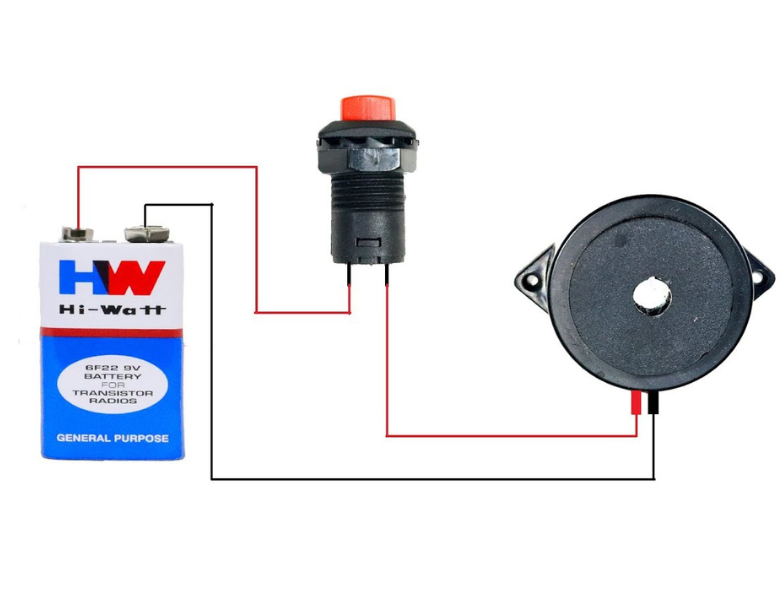
How to Connect (Wire) DC Buzzer with 9V Battery & Switch | How to Make a Simple Electric Circuit
(Simple buzzer circuit with battery and switch – imagine adding parallel paths for louder/consistent sound.)
Practice Question 5 (List Factors)
Name any FOUR factors that affect how loud a buzzer sounds in an electric circuit.
(From content: Number of cells/voltage, circuit type (series/parallel), resistance, buzzer quality/rating.)
Practice Question 6 (Real-Life Application)
Give TWO real-life examples where buzzer circuits are used, and explain why a parallel circuit might be better for one of them.
(Examples: Doorbells, alarm systems. Parallel: Consistent loud sound even if other parts are added.)
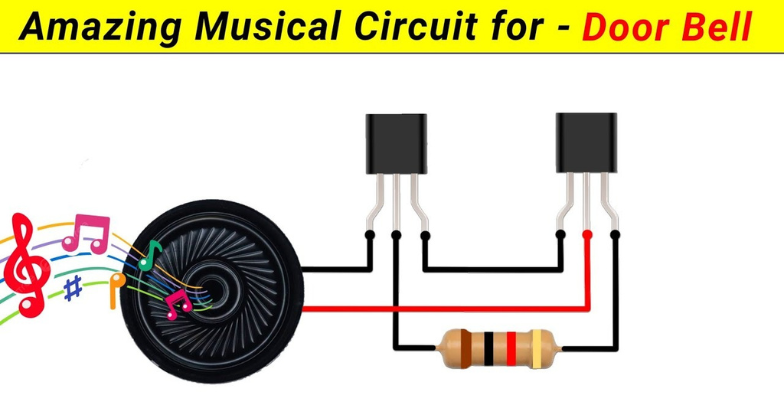
(Doorbell-style buzzer setup – common real-life use.)
Practice Question 7 (True/False with Reason)
True or False: In a series circuit, adding more buzzers makes each one louder.
False – Current is the same through all, but voltage drops, so each sounds weaker.
Conclusion
In conclusion, buzzer loudness in electric circuits shows how electrical energy turns into sound energy. It depends on current flow, voltage, circuit type (series makes it weaker, parallel keeps it strong), and components like batteries and buzzers. Understanding these basics helps students see real-world uses in doorbells, alarms, and gadgets.
Online education makes learning topics like electric circuits easier and more fun for everyone. With an experienced online science tutor in UK and other countries, students get personal help, clear explanations, and flexible lessons from home—no travel needed. This builds strong confidence, fixes learning gaps, and improves grades in science. Whether in the UK, remote areas, or anywhere else, online tutoring platfrom opens doors to better education and brighter futures. Start exploring with a good online science tutor today!
