

Understanding the relationship between two variables is important in statistics. One of the most popular methods is the Pearson correlation coefficient. It helps measure how strongly two variables are related.
In this blog, we will explain the concept simply. We will also solve problems using 2–3 different methods. This makes learning easier and more practical.
What Is the Pearson Correlation Coefficient?
The Pearson correlation coefficient measures the linear relationship between two variables.
It is usually represented by r.
- The value of r lies between -1 and +1
- r = +1 means perfect positive correlation
- r = -1 means perfect negative correlation
- r = 0 means no linear relationship
📌 Example use cases
- Relationship between study hours and marks
- Height and weight of students
- Temperature and electricity usage
Formula for Pearson Correlation Coefficient
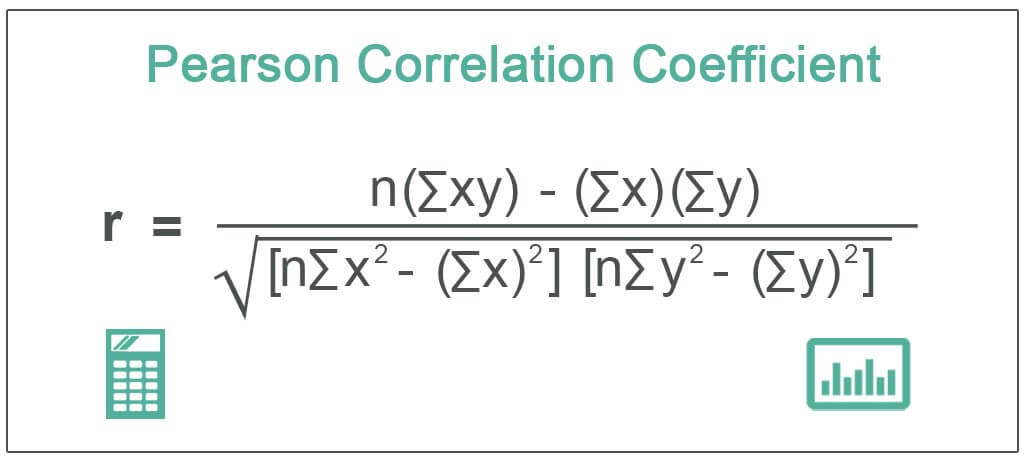
Where:
- x and y are the variables
- n is the number of observations
Problem Example
| X | Y |
| 2 | 4 |
| 4 | 6 |
| 6 | 8 |
| 8 | 10 |
We will now solve this using three methods.
Method 1: Direct Formula Method
Step 1: Create a working table
| X | Y | X² | Y² | XY |
| 2 | 4 | 4 | 16 | 8 |
| 4 | 6 | 16 | 36 | 24 |
| 6 | 8 | 36 | 64 | 48 |
| 8 | 10 | 64 | 100 | 80 |
Step 2: Find sums
- ΣX = 20
- ΣY = 28
- ΣX² = 120
- ΣY² = 216
- ΣXY = 160
- n = 4
Step 3: Apply the formula
After calculation:
r=1r = 1r=1
✔️ This shows a perfect positive correlation.
Method 2: Using Deviation from Mean
This method is useful when values are close to the mean.
Step 1: Find mean
- Mean of X = 5
- Mean of Y = 7
Step 2: Find deviations and multiply
| X | Y | dx | dy | dx·dy |
| 2 | 4 | -3 | -3 | 9 |
| 4 | 6 | -1 | -1 | 1 |
| 6 | 8 | 1 | 1 | 1 |
| 8 | 10 | 3 | 3 | 9 |
Step 3: Apply deviation formula
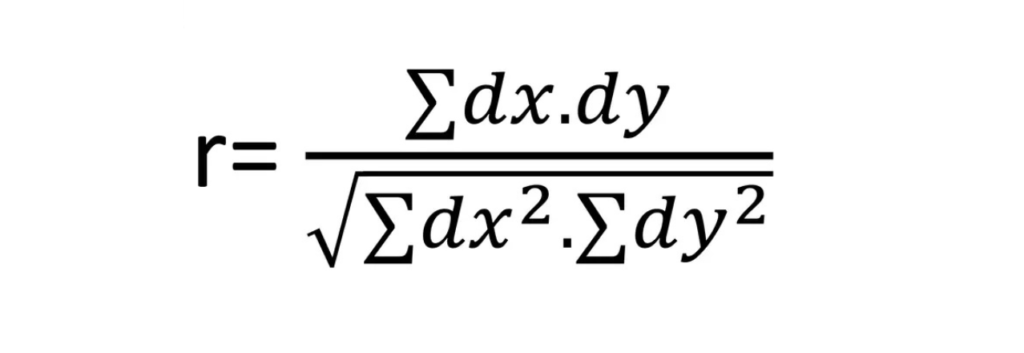
✔️ Result is again r = 1
Method 3: Using Technology (Calculator or Software)
This is the fastest method.
You can use:
- Scientific calculators
- Excel (=CORREL(array1, array2))
- Python or online statistical tools
Steps:
- Enter X and Y values
- Select correlation function
- Read the result
✔️ Best for large datasets.
Common Mistakes to Avoid
- Mixing correlation with causation
- Using Pearson for non-linear data
- Ignoring outliers
Always check your data visually first.
Why Students Struggle with Correlation Problems
Many students find formulas confusing.
Others struggle with interpretation.
This is where expert guidance helps.
At Math Make Smart, we provide online tutoring support for statistics and mathematics.
We help students understand concepts step by step.
Our tutors focus on problem-solving, not memorization.
We proudly support students in:
- The UK
- USA
- Ireland
- Canada
- Australia
- New Zealand
Whether you need help with correlation, regression, or exam preparation, our online tutors are ready to help.
Final Thoughts
The Pearson correlation coefficient is a powerful statistical tool. It helps you understand relationships between variables clearly. Learning multiple methods builds confidence and accuracy.
If you want personalised help or exam-focused guidance, Math Make Smart is here to support your learning journey globally. Smart learning starts with the right guidance. If you need online math tutor or any other tutor, you can directly contact us here; you will get free demo sessions for your better understanding.
